
Real installation detail · privacy reviewed
FoxESS EQ4800 installation: the finish is in the details.
A recent FoxESS EQ4800 installation, documented for the things a homeowner can actually inspect: mounting, cable routing, isolation access and clear energy-storage labelling.
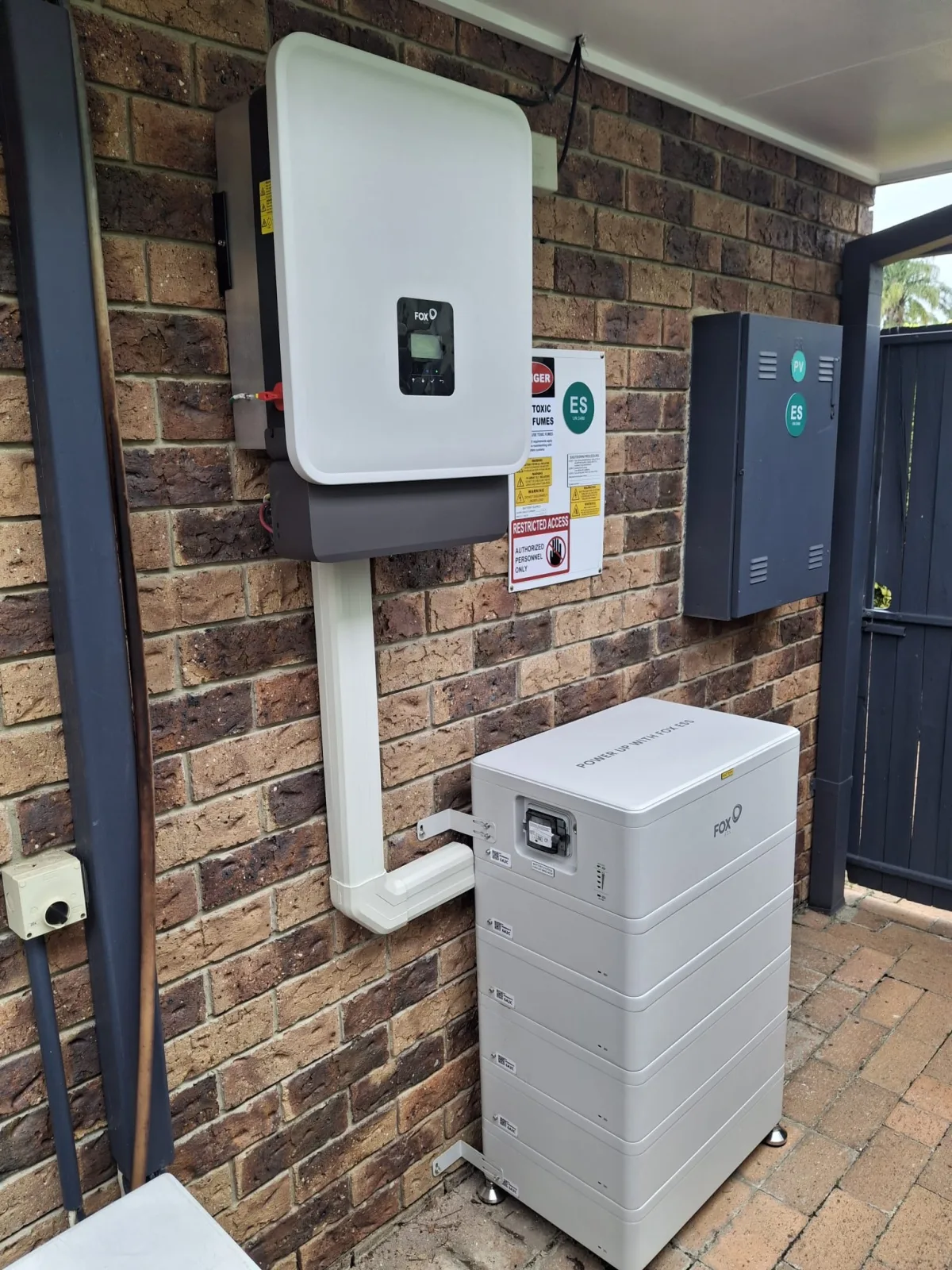
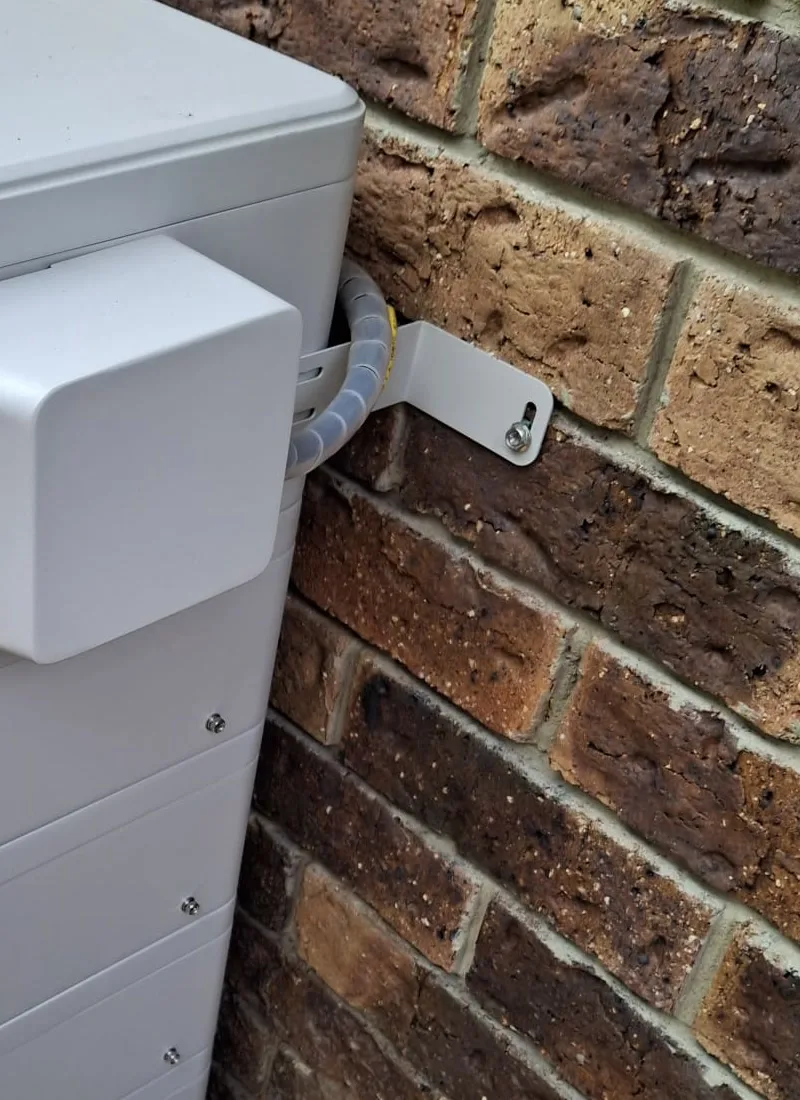
Secure mounting
Battery and associated equipment are supported against the actual wall and floor conditions visible on site.
Protected routing
Conduit and cable paths are kept visible enough to inspect and service, rather than hidden behind a headline package price.
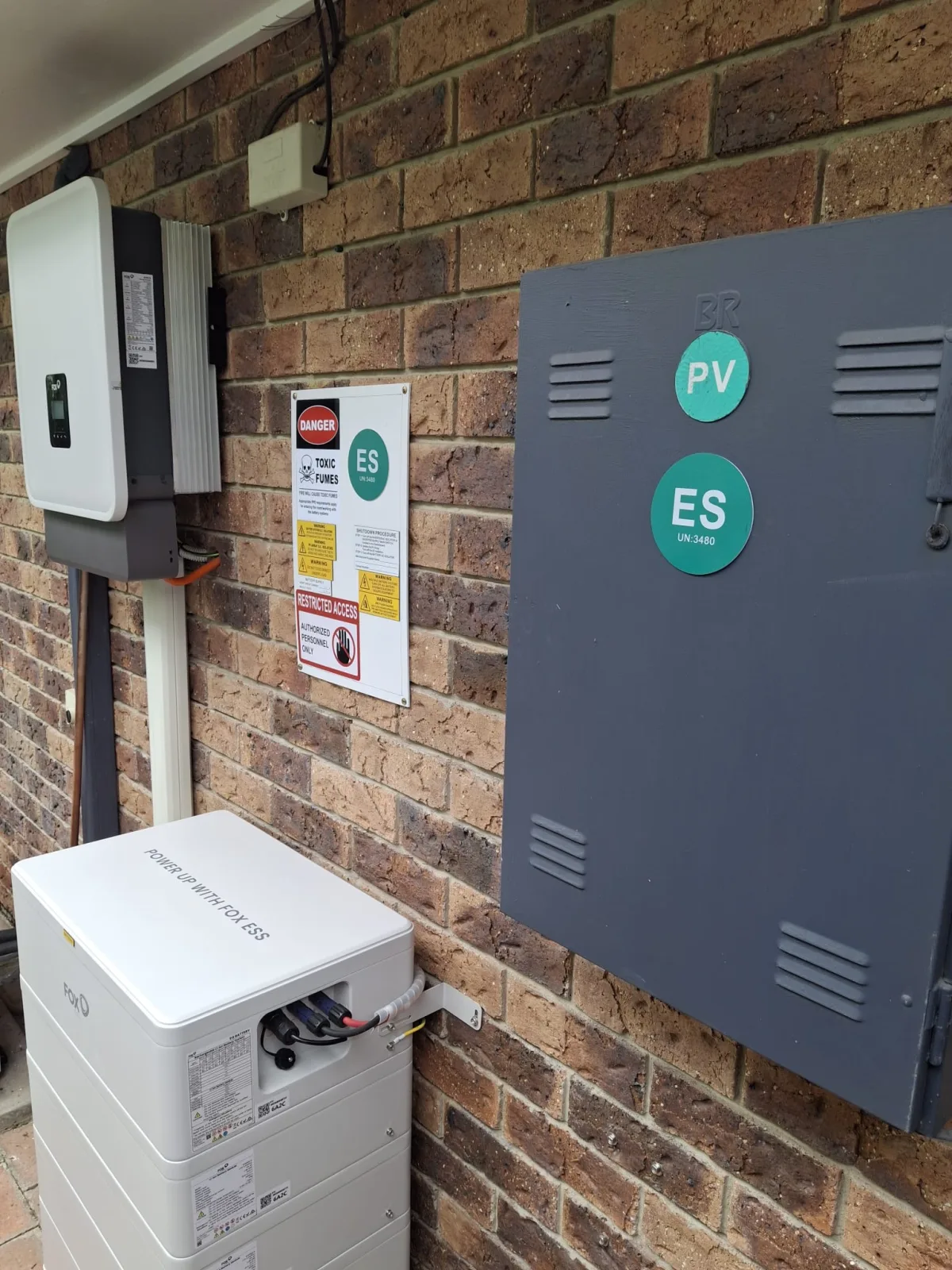
Clear isolation
Isolation points and PV / energy-storage labels help make the operating boundary legible to the people who need to work on it.
What the camera can—and cannot—tell you
Visible workmanship is evidence, not a compliance certificate.
The photographs show the supplied FoxESS EQ4800 label, protected cable runs, wall mounting, floor support feet or brackets, an accessible isolation point and PV / ES / restricted-access signage.
They do not prove every hidden cable, test result, grid setting or site requirement. Full compliance depends on the complete installation, current manufacturer instructions, testing and the applicable rules at the property.
That distinction is part of a useful case study: show what is visible, state what remains unknown, and let the site assessment decide the rest.
Three details up close
A homeowner’s visual checklist.
Ask for the same clarity on your proposal.
Send the suburb, existing inverter model and your preferred battery location. We’ll explain which details are known, which need a site check and what backup scope would change.
Installation questions
Use the photos to ask better questions.
What can be seen in the EQ4800 installation photographs?
The photographs show an EQ4800 battery installation with protected cable runs, wall mounting, floor support feet or brackets, an isolation point and PV, energy-storage and restricted-access safety labelling.
Does a tidy installation photograph prove full compliance?
No. A photograph can show visible workmanship details, but full compliance depends on the complete site, equipment instructions, electrical testing, documentation and the applicable requirements at the time of installation.
Can I use this page to choose a battery for my own home?
Use it to understand the level of detail worth asking about, not as a substitute for a site assessment. Your phase, existing solar, switchboard, location and backup scope still need to be checked.
Next read
From visible detail to a site-specific plan.
Installer comparison
How to choose a solar battery installer in Brisbane
Compare accreditation, equipment, site scope, backup, warranties and after-sales responsibility before signing.
Read the guide →Three-phase design
Three-phase home battery guide for Brisbane
Understand inverter architecture, existing solar, metering, Energex connection pathways and blackout scope.
Read the guide →Warranty and support
Home battery warranty and after-sales support
Separate product, performance and workmanship cover, registration, consumer rights and the fault pathway.
Read the guide →